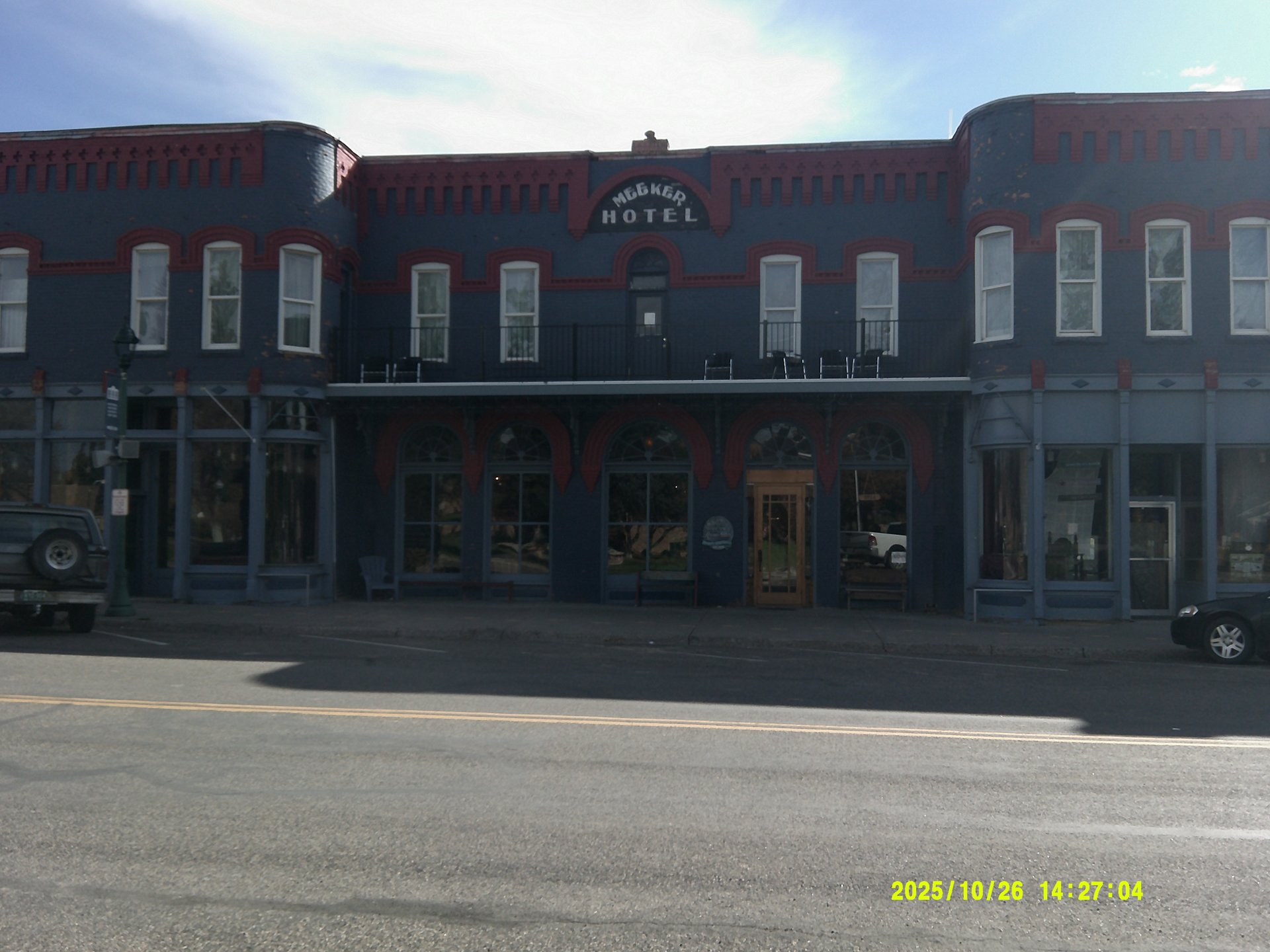
Meeker Hotel and Cafe, Meeker, Colorado
Haunted History of the Meeker Hotel and Café
Meeker, Colorado
Tucked away along Main Street in the quiet ranching town of Meeker, Colorado, stands a building where history doesn’t just live—it lingers. The Meeker Hotel and Café, with its weathered brick façade and Old West charm, is more than a place to sleep or grab a meal. It’s a place where stories—some documented, others whispered—have settled into the walls and, according to many, never left.
A Frontier Beginning
The story begins in the late 19th century, when Meeker was still a rough frontier outpost shaped by cattle, conflict, and survival. The original hotel traces its roots back to the 1880s, when an adobe structure served as both lodging and, at one time, military barracks.
Among its earliest figures was Charlie Dunbar, a professional gambler and one of the hotel’s original partners. His life—and death—would become one of the building’s most enduring legends. Only months after opening, Dunbar was shot and killed during a dispute over a card game, embedding the hotel’s story with violence and mystery from the very beginning.
Ownership passed through the hands of early pioneers, including Susan Wright and her brother Rueben S. Ball, who oversaw the construction of the current brick hotel in 1896. Additions in the early 1900s expanded the property, and nearby buildings evolved into what is now the café—once a post office, then a bank, before becoming a dining space in 1917.
The hotel would go on to earn a place on the National Register of Historic Places, solidifying its importance as a relic of Colorado’s frontier era.
But history here is not confined to plaques and photographs.
The Ghosts That “Checked In”
Ask locals or staff, and you’ll often hear the same phrase: some guests never checked out.
Over the years, a consistent set of apparitions has been reported—so consistent, in fact, that they’ve become part of the hotel’s identity. Many accounts describe four primary spirits said to inhabit the building:
- A young girl
- A woman in period clothing
- A gambler (often linked to Dunbar)
- A soldier or military figure
These figures are not described as malevolent. Instead, they are often portrayed as residual presences—echoes of lives once lived, replaying fragments of the past. Staff and guests alike have reported sightings and sensations that feel more curious than threatening.
Footsteps in Empty Halls
One of the most common experiences reported at the hotel is the sound of footsteps—slow, deliberate pacing in hallways or adjacent rooms.
In one account, a guest complained about hearing someone walking next door, only to discover that the room was completely unoccupied.
Employees have echoed similar stories over the years. Some describe hearing movement late at night when the building is otherwise silent. Others mention doors opening and closing on their own, or the unmistakable feeling that someone else is nearby.
“It’s a comforting feeling,” one longtime worker noted, suggesting that whatever remains in the hotel is not hostile, but simply present.
The Painted Lady
Perhaps the most famous spirit associated with the Meeker Hotel is known simply as the Painted Lady.
Described as a woman dressed in early 20th-century fashion, she is said to appear heavily made up, as if ready for an evening out long ago. Her presence is often tied to a specific room—one that reportedly carries a lingering scent of vintage perfume.
Staff have noted strange occurrences in that room: doors that refuse to behave, subtle disturbances, and an atmosphere that feels distinctly different from the rest of the hotel. Out of respect—or perhaps caution—renovations to the room have been minimal.
Some say she prefers it that way.
The Gambler Who Stayed
Charlie Dunbar’s violent death has made him a central figure in the hotel’s paranormal lore. As a gambler whose life ended abruptly within the building, many believe his spirit never truly left.
Guests have reported seeing a man in period attire, sometimes near the upper floors or lingering in quiet corners. Others claim to hear pacing—restless, repetitive, as if echoing a final, unresolved night.
Whether these experiences are psychological or something more, Dunbar’s story continues to shape how visitors interpret what they encounter.
A Presence, Not a Threat
Unlike many haunted locations that trade in fear, the Meeker Hotel’s reputation is notably different.
Those who believe in its hauntings often describe the energy as calm—even welcoming. Sightings are infrequent, sometimes reported only a few times a year, but the sense of presence is persistent.
Some interpret this as “residual energy,” a kind of emotional imprint left behind by the building’s long history. Others see it as something more personal—spirits coexisting quietly with the living.
Either way, the tone is consistent: this is not a place of terror, but of memory.
Where History and Legend Meet
Today, the Meeker Hotel and Café continues to operate much as it has for over a century—welcoming travelers, serving meals, and preserving its Old West character. The lobby still displays relics of the past, and the building itself remains a living museum of Meeker’s history.
Yet beneath that charm lies something harder to define.
Maybe it’s the weight of frontier stories—the conflicts, the ambitions, the sudden deaths. Maybe it’s the passage of time itself, layering memory upon memory until it feels almost tangible.
Or maybe, just maybe, some of those stories never ended.
Final Thoughts
The haunted history of the Meeker Hotel and Café sits at the intersection of fact and folklore. Its documented past—marked by frontier hardship, personal tragedy, and decades of transformation—provides fertile ground for legend.
And whether you believe in ghosts or not, one thing is certain:
when you walk its halls, you’re not just stepping into a hotel.
You’re stepping into a story that refuses to fade.
Location Photos (1)
 DarthMystick
• Mar 16, 2026
DarthMystick
• Mar 16, 2026